


Pigmentos blancos para tatuajes (dióxido de titanio) y seguridad: lo que realmente dice la ciencia
Subscribe to receive the latest Insights
Thank you! Your submission has been received!
Oops! Something went wrong while submitting the form.
Follow Us
White tattoo pigments—often based on titanium dioxide (TiO₂), also known as White 6 (PW6)—raise a lot of questions online, especially in the context of cancer risk and tattoo removal. This article breaks down what the evidence shows, what it doesn’t show, and what it means for clients and artists.
What Titanium Dioxide Is and Where It’s Used
Titanium dioxide is one of the most common white pigments in the world. It’s used in:
- Tattoo inks (especially lightening blends and “white highlight” mixes)
- Sunscreens
- Paints
- Food products
- Pharmaceuticals
- Cosmetics
Because it’s so ubiquitous, it gets a lot of attention in safety discussions.
Does Titanium Dioxide in Tattoos Cause Cancer?
Bottom line: No credible evidence shows that titanium dioxide in tattoo pigments causes cancer.
Here’s what the science says:
- The only cancer-related concerns linked to TiO₂ are from inhalation of certain powders, not from pigments injected into the skin.
- In the European Union, the carcinogen classification for TiO₂ applies only to powder mixtures with ≥1% of very small particles (≤10 μm) when inhaled—not to tattoo ink.
- The International Agency for Research on Cancer (IARC) lists TiO₂ as Group 2B (“possibly carcinogenic”) based on inhalation studies in animals, but this classification does not translate to pigment injected into the skin.
- There is no evidence of a widespread cancer epidemic related to tattoos or tattoo removal. If ink caused cancer in measurable numbers, it likely would have shown up in public health data given how common tattoos are globally.
So, while regulators classify TiO₂ cautiously due to its behavior in airborne form, there is no credible scientific prooflinking tattoo TiO₂ to cancer.
The Real Biological Question: Do Tattoo Pigments Migrate?
Yes — pigments, including titanium dioxide nanoparticles, can migrate from the tattoo site to regional lymph nodes.
This has been shown in multiple studies and is biological fact, though not evidence of harm on its own.
When pigment particles enter the lymphatic system, they can accumulate in lymph nodes. This is true for many colors, not just TiO₂.
Migration doesn’t mean cancer or disease; it simply means the body processes pigment over time. What remains unknown is the long-term biological significance of this accumulation, and research is ongoing.
Regulatory Trends: EU vs. US
In the European Union
The EU has implemented regulations under REACH that restrict many chemicals in tattoo inks to reduce chronic risks and allergic reactions. These restrictions are not a ban on tattooing or a declaration that inks are unsafe—they are a precautionary measure to make inks safer.
Titanium dioxide is not broadly banned for tattoo use in the EU, but manufacturers must follow tighter standards for many additives.
In the United States
The U.S. Food and Drug Administration (FDA):
- Has not banned TiO₂ in tattoo inks
- Is currently focused on contamination control and accurate labeling
- Has found that many inks contain unlisted additives or pigments, which complicates risk tracking and client reactions
In a 2024 study published in Analytical Chemistry, researchers found that 83–90% of tested U.S. tattoo inks contained unlisted ingredients or additives, which makes accurate risk assessment difficult and underscores the importance of using reputable products.
What This Means for Tattoo Safety
If a client asks “Is white ink safe?”
A scientifically honest answer is:
There is no clear evidence linking titanium dioxide in tattoo ink to cancer.
However, “inert” does not mean “inactive everywhere.” Pigment particles can migrate, and some individuals develop allergic or granulomatous reactions.
From a safety perspective, TiO₂ in a tattoo is not considered a cancer risk based on current evidence.
What This Means for Tattoo Removal
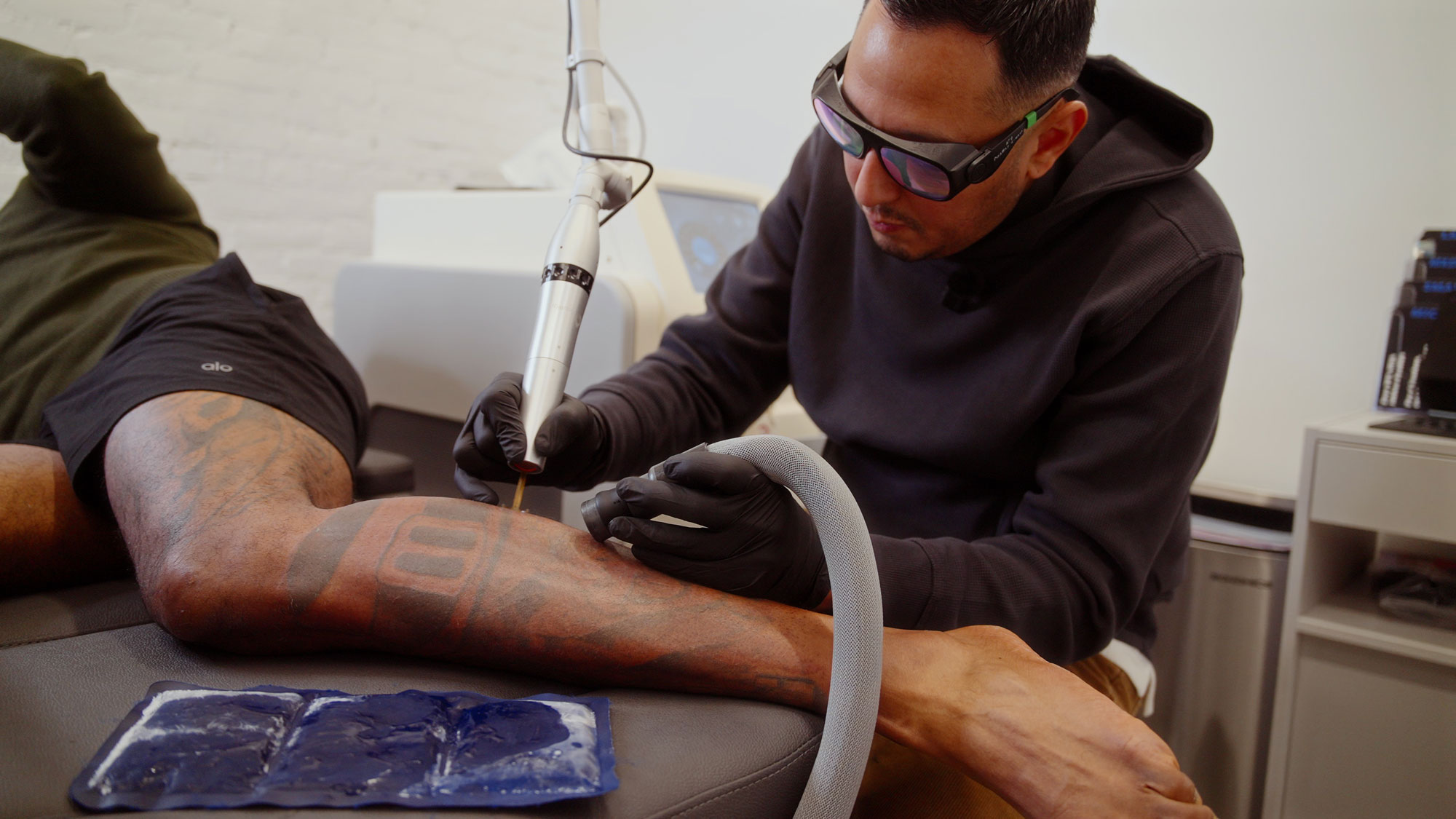
Titanium dioxide poses special challenges in removal:
White/whitened pigment responds poorly to lasers
TiO₂ does not absorb laser energy efficiently. Instead, it scatters light, which makes it harder for the laser to break down the pigment.
This often results in:
- Slower clearance
- A tendency for white pigment to persist longer than other colors
- Sometimes paradoxical darkening or incomplete fading
For removal planning, it’s important to counsel clients that white and titanium dioxide-containing mixes may not clear as predictably as other pigments.
Migration matters
Some TiO₂ nanoparticles may be taken up by immune cells and transported to lymph nodes instead of being cleared locally. This contributes to the perception of slower fading and can affect how pigment responds over time.
Expectations and alternatives
Because white pigment is difficult to break up with lasers:
- Test spots are recommended
- Clients should be informed of realistic fading expectations
- In some cases, lightening or redesign strategies can be better alternatives than attempting full removal
Conclusiones prácticas para artistas y profesionales de mudanzas
- Utilice proveedores de tinta acreditados con certificados de análisis (CoA) y hojas de datos de seguridad (SDS). El etiquetado incorrecto y los aditivos que no figuran en la lista son comunes en las tintas para tatuajes.
- No exagere el riesgo: El TiO₂ en los tatuajes no está relacionado con el cáncer en los seres humanos, y las advertencias reglamentarias existentes se basan en el riesgo de inhalación, no en la inyección dérmica.
- Espere una eliminación más lenta de pigmentos blancos y que contienen TiO₂ debido a la dispersión de la luz y a la mala absorción.
- Educar a los clientes: Sea transparente acerca de las limitaciones de eliminación y los posibles resultados con pigmentos blancos y pastel.
- Esté al tanto de la migración: Comprenda que el pigmento se puede acumular en los ganglios linfáticos, lo cual es una biología normal, no una evidencia de una enfermedad sistémica.
- Siga las actualizaciones reglamentarias: Las directrices de la UE y la FDA siguen evolucionando a medida que se dispone de más datos sobre la química de los pigmentos.
En resumen
- El dióxido de titanio (White 6) se usa comúnmente en pigmentos para tatuajes y muchos otros productos.
- Evidencia actual no se muestra que el TiO₂ del tatuaje causa cáncer en los seres humanos.
- El único riesgo de cáncer establecido en la literatura está relacionado con la inhalación de ciertos polvos de TiO₂, no con pigmentos dérmicos.
- Puede producirse una migración de pigmentos a los ganglios linfáticos, pero esto no equivale a una enfermedad.
- El pigmento blanco es uno de los colores más difíciles de eliminar con láser debido a sus propiedades físicas.
- Los médicos y los artistas deben centrarse en las prácticas seguras, la información precisa y los resultados realistas.
Si quieres, puedo convertir esta explicación en una Preguntas frecuentes orientadas al cliente, pieza de formación clínica, o publicación en redes sociales para ayudar a educar más a tu audiencia.
Información Relacionada


Hablemos
¿Tienes alguna pregunta sobre tu tatuaje o tienes curiosidad por conocer tus opciones? Envíanos un mensaje y uno de nuestros expertos te guiará personalmente hacia el siguiente paso más seguro y eficaz.
720-465-5377
Thank you! Your submission has been received!
Oops! Something went wrong while submitting the form.
