


Red Tattoo Removal on Darker Skin Types: Safety, Expectations, and How We Approach It at INKLESS
Subscribe to receive the latest Insights
Thank you! Your submission has been received!
Oops! Something went wrong while submitting the form.
Follow Us
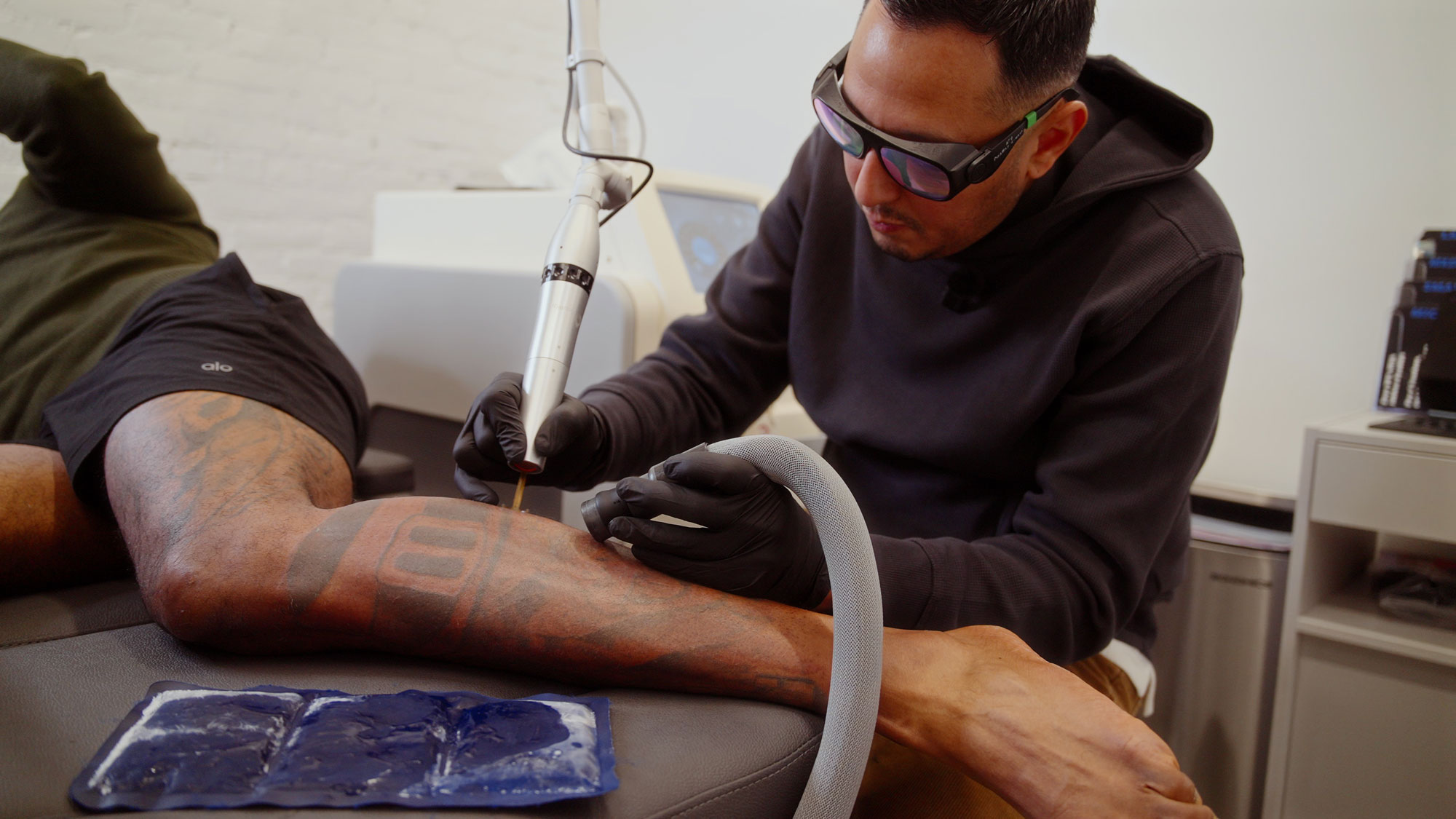
Red tattoo removal on melanated skin types is absolutely possible, and in many cases full removal can be achieved. However, it is important to be transparent with clients from the beginning: while red ink can respond well to laser treatment, removing red pigment safely on darker skin tones is a highly specialized process that requires experience, careful protocol selection, and a full evaluation of how the skin responds to heat and trauma.
At INKLESS, our approach is built around education, safety, and realistic expectation-setting. When clients fully understand the process before starting, they feel more confident, remain committed, and are far more satisfied with their results—whether the removal moves quickly or needs to progress more conservatively.
Can Red Tattoos Be Removed on Darker Skin?
Yes. Red tattoos on darker skin types can be treated safely and can often be fully removed. The key is using the correct wavelengths, conservative fluence settings, proper cooling, and longer spacing between treatments when needed.
That said, the process is not identical to removing red ink on lighter skin. Because melanated skin contains higher concentrations of melanin, it absorbs more laser energy, especially at shorter wavelengths. This increases the risk of unwanted pigment changes if treatment is too aggressive.
For this reason, success depends less on how powerful the laser is and more on how experienced the provider is.
Why Red Ink Requires More Caution on Melanated Skin
Red pigment is typically treated using shorter wavelengths, which are closer to the visible spectrum. These wavelengths can interact more strongly with the epidermis, creating higher surface heating and greater risk of trauma in the basal layer of the skin.
The basal layer is where melanocytes reside. These are the cells responsible for producing melanin, which gives the skin its color. If this layer becomes overstressed, it increases the chance of:
- Hyperpigmentation (darkening)
- Hypopigmentation (lightening)
- Delayed healing
- Skin sensitivity during later sessions
Because of this, we cannot treat red ink on darker skin as aggressively as we would treat black ink or other pigments. The priority must always be preserving the skin’s natural tone and integrity.
The Allergy Risk With Red Tattoo Pigments
Another important factor is that red tattoo pigments have a higher likelihood of allergic reaction compared to other colors. Some red inks contain ingredients that can trigger immune sensitivity, even if the tattoo has looked stable for years.
In certain cases, an allergic response can be active or dormant, and laser treatment can aggravate that reaction if it is not approached correctly.
This is why INKLESS offers complimentary test spots when we see any signs that a red tattoo may have an allergic component. This allows us to evaluate how the skin responds before committing to full treatment.
Our goal is to prioritize safety first, not speed.
Why Client Education Matters More Than Sales
Many people of color have a realistic fear of tattoo removal. This fear is justified because they have often:
- Seen horror stories online
- Been told by other clinics they are not a candidate
- Heard misinformation about permanent hypopigmentation
- Experienced poor results from providers using outdated lasers
This is why our approach is not to over-promise results just to make a sale.
Instead, we educate, evaluate, and set realistic expectations from the beginning. When clients understand that we may need to take the process slower to protect their skin tone, they remain confident in the plan and committed to the removal process.
This is also why exceeding expectations becomes powerful. If the client enters the process prepared for a conservative approach, and the tattoo responds better than expected, they will feel even more excited and motivated to continue.
Why This Tattoo Is Likely a Good Candidate
In this specific case, the tattoo does not appear especially difficult to remove. Face tattoos often respond well because:
- The skin experiences more exfoliation and friction from daily washing
- The area is exposed to the elements and natural fading factors
- Tattoo application on the face is often lighter than body tattoos
- Circulation is generally strong in facial tissue
Additionally, the surrounding skin shows no signs of hypo or hyperpigmentation, which is a positive sign that the skin is handling normal environmental stress well.
These are all strong indicators that the tattoo can be treated safely with a well-designed protocol.
The INKLESS Approach: Safe, Conservative, and Customized
At INKLESS, we take red ink removal on melanated skin seriously. We do not rush treatments, and we do not apply a one-size-fits-all protocol. Instead, we:
- Perform a full dermal evaluation
- Assess pigment depth, saturation, and blend composition
- Select conservative settings to avoid basal layer trauma
- Use proper cooling and aftercare support
- Offer complimentary test spots when allergy risk is suspected
- Space treatments appropriately to allow full pigment metabolism and skin recovery
This is how we achieve safe outcomes without compromising the client’s natural skin tone.
Final Thoughts
Red tattoos on darker skin types can absolutely be removed, and in many cases full removal is achievable. However, success requires a specialized approach that prioritizes skin preservation, controlled settings, and realistic expectations.
At INKLESS, we believe the most important part of the process is education. Clients deserve honesty about what is possible, what risks exist, and why we may need to proceed more conservatively than we would with other tattoo colors.
When clients understand that the goal is long-term success—not aggressive short-term fading—they trust the process, stay committed, and ultimately achieve the safest and best cosmetic outcome possible.
Related Insights

Let’s talk
Have a question about your tattoo or curious about your options? Send us a message and one of our experts will personally guide you toward the safest, most effective next step.
720-465-5377
Thank you! Your submission has been received!
Oops! Something went wrong while submitting the form.
