


Laser Tattoo Removal for Melanated Skin Types: Safety, Risks, and What to Expect
Subscribe to receive the latest Insights
Thank you! Your submission has been received!
Oops! Something went wrong while submitting the form.
Follow Us
One of the most common questions we receive at INKLESS is whether laser tattoo removal is safe for melanated skin types. This concern is completely understandable, especially considering the misinformation that exists online and the unfortunate reality that many clinics lack the training or equipment necessary to safely treat darker skin tones.
The truth is that laser tattoo removal can be extremely safe and highly effective for melanated skin when performed correctly. The key is using the right wavelengths, proper protocols, and a conservative approach that prioritizes the health of the skin while still producing strong fading results.
Why Skin Tone Matters in Tattoo Removal
Laser tattoo removal works by delivering light energy into the skin to break down tattoo pigment. The body then filters and removes the fragmented pigment over time through the immune and lymphatic systems.
However, melanin is also a pigment. Since darker skin contains higher levels of melanin, the laser has more natural pigment in the skin to potentially interact with. This is why treating melanated skin requires additional expertise. The goal is to target only the tattoo pigment while preserving the surrounding melanin.
The area of greatest sensitivity is the basal cell or germinative layer of the skin, which is where melanocytes reside. Melanocytes are the cells responsible for producing melanin, and if this layer is overstressed or damaged, it can increase the risk of pigment changes.
When protocols are followed properly, the risk of complications remains extremely low.
The Safest Wavelengths for Melanated Skin
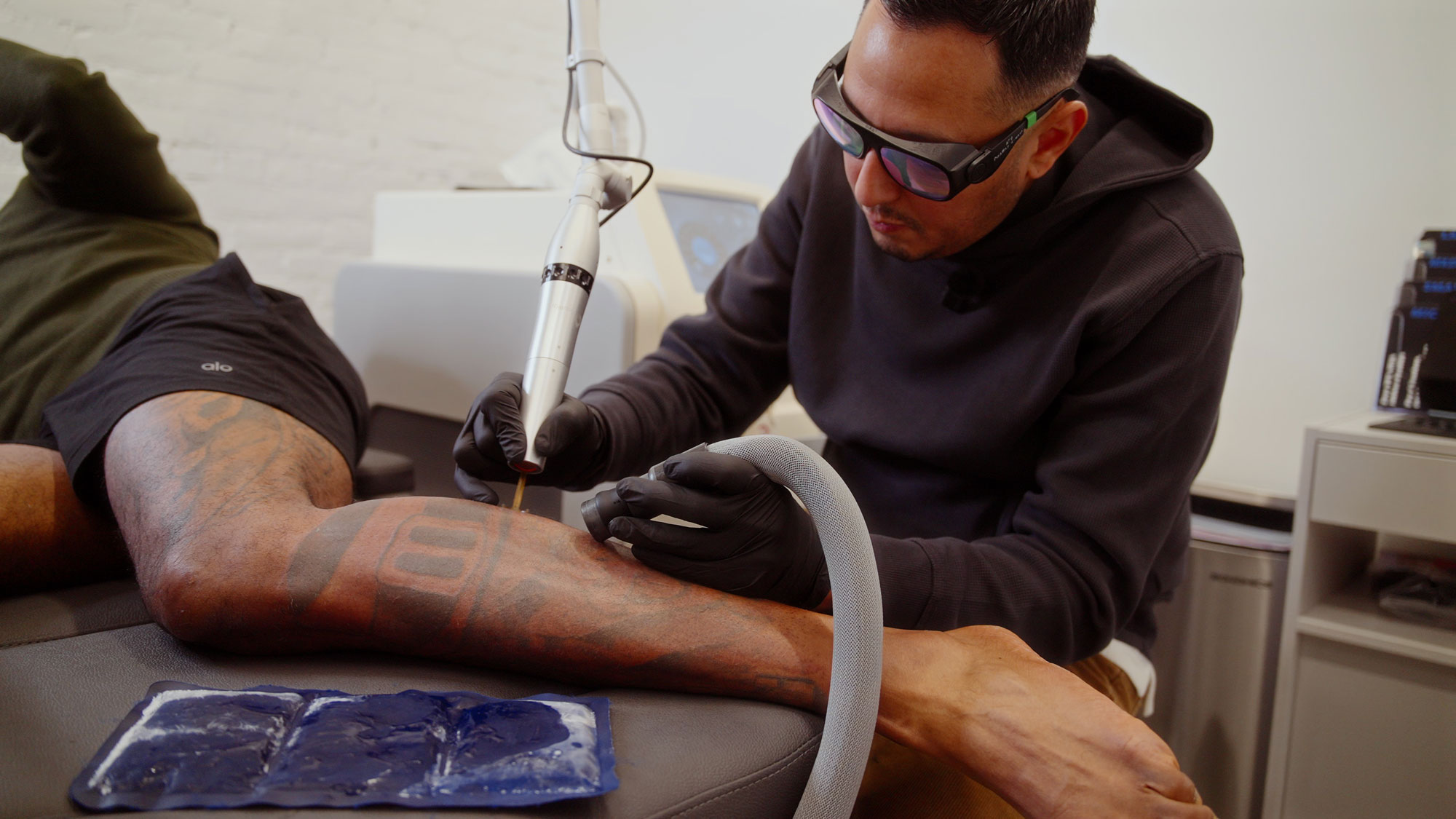
When treating black ink tattoos on melanated skin, the safest and most effective wavelengths are typically 1064nm and 532nm.
These wavelengths are especially effective for black, grey, and red-spectrum tattoos. They are also widely regarded as the safest wavelengths for darker skin tones because they can target tattoo pigment with minimal interference with melanin when used correctly.
At INKLESS, we rely heavily on these wavelengths and use carefully selected settings designed to maximize results while minimizing trauma to the skin.
When the Risk Increases
While the risk of complications is generally low when proper treatment methods are used, there are situations where risk increases significantly. The most common causes of unwanted side effects such as hyperpigmentation, hypopigmentation, blistering, or scarring are not the client’s skin tone itself, but rather poor technique or improper equipment.
Risks increase when aftercare is not properly followed. Post-treatment healing plays a major role in how the skin recovers. Sun exposure, picking at the area, improper cleansing, and using harsh products can all increase irritation and pigment disruption.
Risks also increase when older or knock-off lasers are used. Many inexpensive tabletop devices, including unregulated lasers imported from overseas, do not deliver stable energy or proper pulse performance. These machines often create uneven treatment, excessive heat, and unnecessary trauma to the skin, increasing the chance of complications.
Another major risk occurs when the wrong wavelengths are used. Wavelengths such as 694nm, 730nm, and 785nm are commonly used to treat green and blue inks, but these wavelengths can be far more aggressive on melanated skin tones. When used incorrectly, they can dramatically increase the risk of pigmentation changes and skin damage.
At INKLESS, these wavelengths are never used carelessly, and skin tone is always a primary consideration when selecting a treatment approach.
How INKLESS Treats Melanated Skin Safely
Tattoo removal is not a one-size-fits-all process, especially for clients with darker skin tones. At INKLESS, every treatment is customized based on the tattoo, the pigment density, the body location, and the skin’s natural melanin level.
Before treating any melanated skin tone, we perform a full dermal evaluation to assess how the skin responds to trauma and how it heals. This evaluation helps ensure that settings are chosen responsibly and that the removal process remains safe throughout the treatment plan.
We follow very specific protocols that are designed to target only the tattoo pigment while preserving surrounding melanin. Our settings are selected carefully to avoid unnecessary strain on the basal cell layer, which reduces the risk of hypo- or hyperpigmentation.
Our approach is grounded in long-term results, not aggressive one-session outcomes that can compromise the skin.
Experience and Specialization Matters
One of the most important factors in safe tattoo removal for melanated skin is the skill and experience of the technician.
As a person of color with nearly two decades of tattoo removal experience, the methods used at INKLESS are not based on theory or guesswork. These protocols have been refined through years of clinical experience treating a wide range of skin types, and they are taught to students and professionals around the world.
Clients should always seek a clinic that has proven experience working with melanated skin tones, not a clinic that treats every client using the same protocol regardless of skin type.
Aftercare Support to Prevent Pigment Changes
Proper aftercare is essential for safe healing, especially for melanated skin types. After treatment, we provide every client with a specialized organic vitamin E-based aftercare balm designed to support skin recovery, reduce inflammation, and minimize the chance of pigment disruption.
This aftercare protocol is designed to help prevent hyperpigmentation and hypopigmentation while preparing the skin for future sessions.
Clients who follow proper aftercare guidelines typically heal faster and maintain healthier skin throughout the removal process.
Is Tattoo Removal Safe for Darker Skin Tones?
Yes. When performed with the correct wavelengths, safe settings, and a properly trained technician, laser tattoo removal is safe for melanated skin and has a high success rate for full removal.
The most important part of the process is working with a clinic that understands how to treat darker skin properly and is willing to prioritize skin integrity and healing timelines.
Pricing and Treatment Expectations
At INKLESS, your first treatment is always $100, regardless of the tattoo’s size, style, color, or location on the body. This allows clients to start the process affordably and see meaningful results from the beginning without pressure or contracts.
Additional treatment pricing is based on the size of the tattoo. Many small tattoos fall into the $200 per session category after the $100 promotional first treatment.
Treatments are typically spaced 6 to 8 weeks apart. This spacing is critical for safety, strong fading between sessions, and reducing the total number of sessions needed by giving the body time to metabolize broken-down pigment.
Because everyone’s body processes ink differently, the exact number of sessions cannot be predicted until we see the response after the first treatment. However, melanated skin with simple black tattoos, especially tattoos that are 5 years old or older and located in areas with good circulation, often responds extremely well to laser removal.
Multiple Tattoos and Discounts
If you are removing multiple tattoos, we offer a multiple tattoo discount. Instead of pricing each tattoo individually, we can often group them together as one larger medium-sized piece, reducing overall cost.
During an in-person consultation, we can evaluate your tattoos and provide exact pricing as well as realistic expectations for treatment count.
Schedule a Consultation
If you would like to speak with one of the owners or schedule a consultation, we are happy to walk you through the entire process, pricing, and any discounts you may be eligible for. You can also schedule an appointment directly by booking online, or send a preferred date, time, and location if you would like our team to assist with scheduling.
If you have any questions, do not hesitate to reach out. Our goal is to make tattoo removal safe, effective, and accessible for every skin type.
Related Insights
Let’s talk
Have a question about your tattoo or curious about your options? Send us a message and one of our experts will personally guide you toward the safest, most effective next step.
720-465-5377
Thank you! Your submission has been received!
Oops! Something went wrong while submitting the form.
