


Pre-Cover-Up Tattoo Lightening: What to Expect and How It Works
Subscribe to receive the latest Insights
Thank you! Your submission has been received!
Oops! Something went wrong while submitting the form.
Follow Us
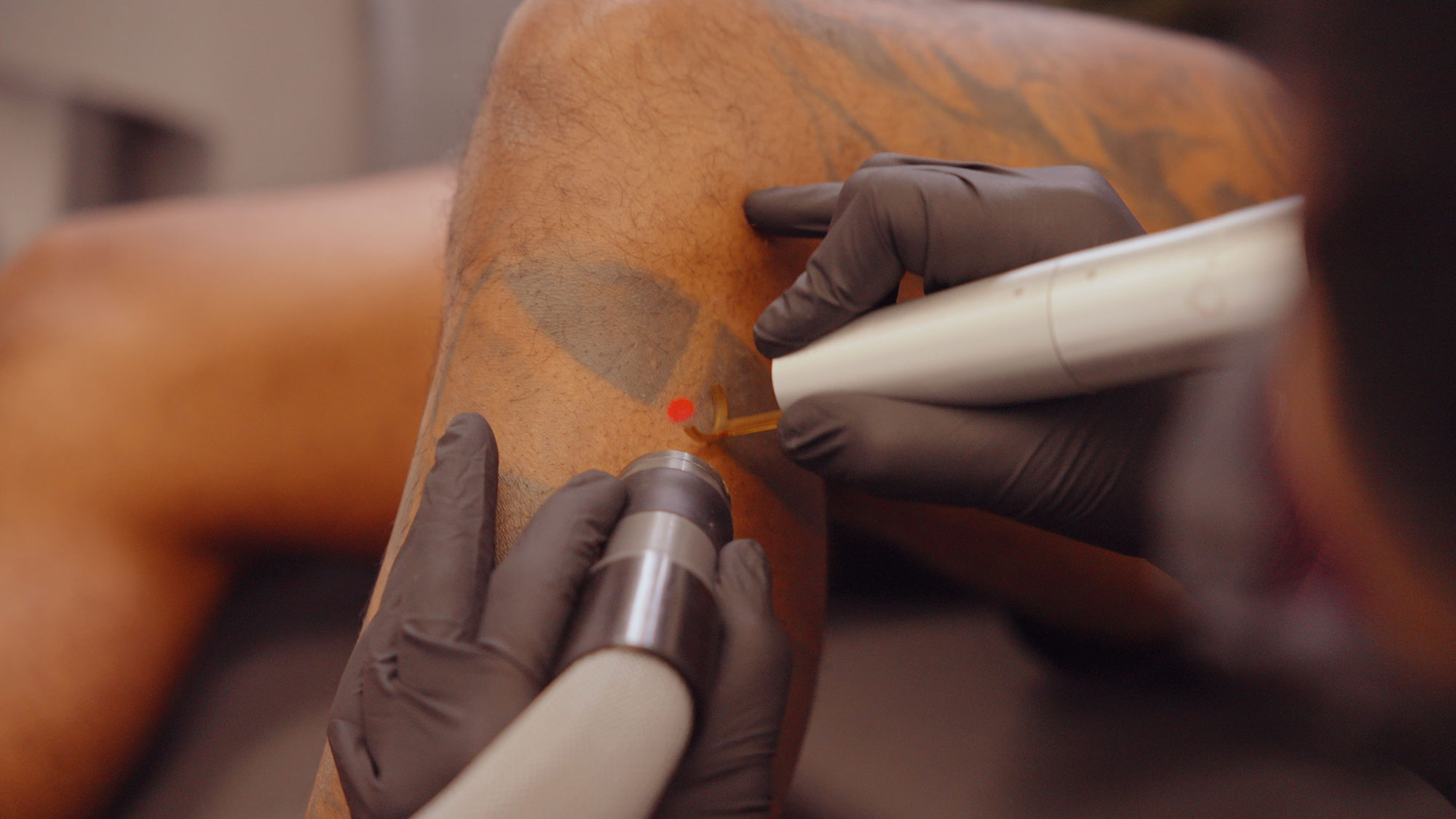
Many people assume laser tattoo removal is only for full tattoo removal. In reality, one of the most common reasons clients choose laser treatment is to lighten an existing tattoo before getting a cover-up.
Pre-cover-up lightening is an ideal option for anyone who wants a new tattoo design but is limited by the darkness, saturation, or visibility of the existing ink. Lightening the tattoo first gives the artist more flexibility, improves the quality of the final cover-up, and reduces the need for heavy over-saturation in the new tattoo.
At INKLESS, we specialize in creating clean, even lightening results that allow artists to do their best work.
Why Lightening a Tattoo Before a Cover-Up Matters
Cover-ups can be challenging when the original tattoo is dark or heavily saturated. In many cases, the artist must compensate by packing more ink, using darker tones, or creating a design that is larger and more complex than the client originally wanted.
Laser lightening solves this issue by reducing the amount of pigment in the skin, giving the artist a cleaner canvas to work with. This can result in a cover-up tattoo that looks more natural, more detailed, and less heavy.
Lightening also helps the artist avoid using excessive black or deep shading just to hide the original tattoo, which often improves the long-term appearance of the new piece.
How Many Sessions Are Needed for Pre-Cover-Up Lightening?
Pre-cover-up lightening is typically a much quicker process than full tattoo removal.
Most clients can expect approximately 2 to 4 sessions, depending on the tattoo’s size, saturation, and pigment depth.
Treatments are generally spaced 6 to 10 weeks apart. Spacing is important because the laser does not remove ink instantly. Instead, the laser breaks pigment into smaller particles, and the body gradually metabolizes and filters those particles over time.
The more time you allow between sessions, the more pigment your body can metabolize. In many cases, longer spacing can lead to fewer total treatments and better fading results, which means a better canvas for the artist.
Why Spacing Treatments Improves Results
Tattoo lightening is a biological process as much as it is a laser process.
After each session, your immune system continues working for weeks and even months, slowly breaking down and clearing the pigment that has already been fragmented. This is why clients often notice their tattoo fading significantly after the laser session is finished.
Giving the body time to complete this process is one of the most effective ways to reduce the number of sessions needed and achieve cleaner lightening without unnecessary trauma to the skin.
What Happens to the Remaining Ink After the Final Session?
One of the biggest advantages of pre-cover-up lightening is that the tattoo continues fading even after the last laser session.
Even if a small amount of the original tattoo remains slightly visible under the new cover-up, it will often continue to fade over time. This helps keep the new tattoo cleaner and reduces the need for the artist to over-saturate the area.
In many cases, what remains becomes non-visible over the months and years following the final laser session.
Within the first three laser sessions, nearly all of the original tattoo pigment has been broken down. The body will continue metabolizing those fragmented particles gradually, even after you have stopped treatments.
This delayed fading is a major reason why pre-cover-up lightening produces such strong long-term results.
What Kind of Results Should You Expect?
The goal of pre-cover-up lightening is not necessarily to remove the tattoo completely, but to fade it enough that a skilled artist can create a clean new design without limitations.
After 2 to 4 sessions, most tattoos become significantly lighter, allowing the artist to use more color, finer detail, and smoother shading without needing to hide dense old ink underneath.
The final outcome is usually a cover-up tattoo that looks cleaner, more natural, and more professionally blended.
Collaboration With Your Tattoo Artist
A successful cover-up requires teamwork between the laser clinic and the tattoo artist.
At INKLESS, we are happy to work directly with your artist once you have a design plan. If there are specific areas the artist wants us to focus on, we can tailor the lightening process to concentrate on those sections.
This targeted approach helps maximize the results and ensures the artist has the best possible foundation for the new tattoo.
Final Thoughts
Pre-cover-up tattoo lightening is one of the fastest and most effective ways to improve the quality of a cover-up tattoo. Most clients only need 2 to 4 sessions, spaced 6 to 10 weeks apart, to create a significantly cleaner canvas.
The more time you allow between treatments, the more fading occurs naturally, often reducing the number of sessions needed and improving results. Even after your final session, the remaining pigment will continue to metabolize and fade over time, helping your new tattoo look cleaner and requiring less over-saturation.
For anyone planning a cover-up, laser lightening is often the difference between a tattoo that looks heavy and forced and one that looks clean, fresh, and professionally executed.
Related Insights
Let’s talk
Have a question about your tattoo or curious about your options? Send us a message and one of our experts will personally guide you toward the safest, most effective next step.
720-465-5377
Thank you! Your submission has been received!
Oops! Something went wrong while submitting the form.
