


Tattoo Removal, Tattoo Pigments, and Cancer: What the Science Actually Says
Subscribe to receive the latest Insights
Thank you! Your submission has been received!
Oops! Something went wrong while submitting the form.
Follow Us
With tattoos becoming more common than ever, it is also becoming more common for people to ask serious health-related questions about tattoo ink, pigment chemistry, and laser tattoo removal. One of the biggest concerns clients bring up is whether tattoo removal can cause cancer.
This is an understandable question, especially with online rumors and viral posts suggesting that breaking tattoo ink apart with a laser could release harmful substances into the body.
The truth is that these concerns deserve a real answer grounded in science, not fear-based speculation.
Has Tattoo Removal Ever Been Proven to Cause Cancer?
No. There have been no documented cases of laser tattoo removal causing cancer.
While some people have theorized a possible link, the scientific evidence does not support the claim that tattoo removal increases cancer risk. Laser tattoo removal has been performed for decades, and millions of treatments have been completed worldwide. If tattoo removal were a meaningful cancer risk, we would expect to see widespread clinical evidence and a pattern of cancer cases associated with removal procedures.
That pattern does not exist.
What Happens to Tattoo Ink During Laser Removal?
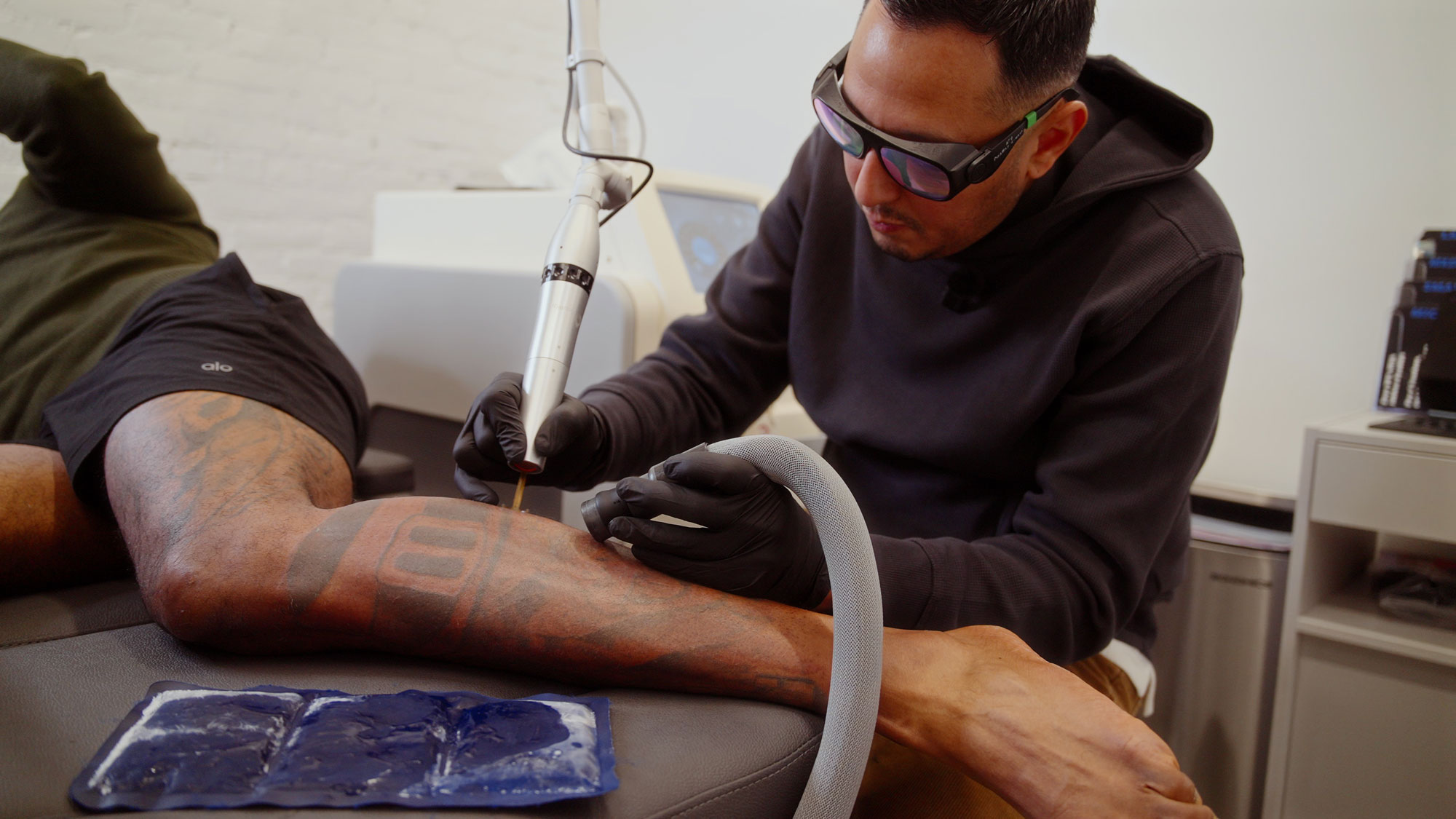
Laser tattoo removal works by breaking tattoo pigment into microscopic particles. The laser does not “remove” the ink instantly. Instead, it fractures the pigment into smaller fragments that the body can gradually clear over time.
After treatment, the immune system and lymphatic system process the fragmented pigment. The particles are then eliminated naturally through the body’s normal waste-removal systems.
This is the same biological process that occurs slowly even without tattoo removal, since the body naturally breaks down and relocates small amounts of tattoo pigment over time.
Laser removal simply accelerates the fragmentation process, allowing the body to clear pigment more efficiently.
Do Tattoo Pigments Contain Potentially Harmful Ingredients?
Some tattoo inks can contain unlisted ingredients, and it is true that certain compounds in pigments may have carcinogenic potential in extremely high concentrations.
However, the key point is dosage.
The quantities of these substances found in tattoo pigments are extremely small, often measured in parts per million. At those concentrations, they pose no measurable health risk based on current scientific understanding.
To put this into perspective, many common foods contain dyes and additives at far higher concentrations than tattoo ink. Processed foods, candies, chips, and certain meats often contain chemical additives that are consumed regularly in quantities much greater than what is present in tattoo pigment.
The presence of a chemical alone does not automatically equal danger. Risk is determined by exposure level, concentration, and biological response.
Why Online Claims Often Sound Convincing but Lack Proof
Many of the cancer-related claims circulating online come from theories that are either inconclusive, misinterpreted, or have been disproven.
Some articles reference laboratory studies that examine pigment chemistry in isolation, but do not demonstrate real-world cancer risk in actual tattooed or tattoo removal populations. Others take worst-case assumptions and present them as established fact.
After decades of research, published papers, case studies, pigment breakdown reports, and long-term clinical experience, the overall consensus remains consistent: there is no demonstrated cancer risk caused by laser tattoo removal.
Does Tattoo Color Matter for Safety?
While tattoo removal itself has not been linked to cancer, different ink colors do have different chemical compositions. Some colors are more likely to cause allergic reactions or inflammatory responses than others.
Black and Grey Tattoos
Black and grey wash tattoos are generally considered the simplest and most predictable pigments. These inks are often primarily carbon black mixed with water or carrier solution.
For clients who want the most minimal pigment exposure possible, black and grey is typically the safest and most straightforward option.
Red Pigments
Red inks are known to cause allergic reactions more often than other colors. Roughly 1 out of every 100 clients may experience an allergic response depending on the specific pigment blend.
Historically, red pigments have been associated with cinnabar-based components. While modern pigments vary widely, red remains the color most commonly linked to irritation or allergic reactions.
Green and Blue Pigments
Green and blue pigments sometimes contain trace compounds that raise concern in theoretical discussions. However, the amounts present in tattoo ink are extremely low and have not been shown to create meaningful cancer risk.
Green and blue are often more difficult to remove, but difficulty removing a pigment is not the same as danger.
If Tattoo Ink Caused Cancer, We Would See Widespread Cases
One of the strongest arguments against the claim that tattoo removal causes cancer is simply the scale of tattooing worldwide.
Millions of people have colorful tattoos, and tattoo removal has been performed for decades. If pigment breakdown during tattooing or removal caused cancer at a measurable rate, we would see widespread documented cases, especially among heavily tattooed populations.
That is not happening.
The absence of widespread cancer patterns is not a coincidence. It reflects the reality that the risk is not supported by evidence.
How Safe Are Tattoo Pigments in the United States?
It is also worth noting that U.S. tattoo pigment manufacturers are widely regarded as some of the best in the world in terms of self-regulation and ingredient quality standards.
While the tattoo industry is not perfect and there are still inconsistencies in labeling, many U.S.-based manufacturers take product safety seriously and continuously improve pigment formulations.
The highest risks tend to come from unregulated pigments, counterfeit products, or low-quality inks that are imported without proper oversight.
Final Thoughts
Tattoo removal does not cause cancer, and there are no documented cases proving a link between laser tattoo removal and cancer development. While tattoo pigments may contain trace amounts of substances that could be harmful at extremely high concentrations, the levels present in tattoo ink are far too small to create measurable risk based on current science.
The majority of cancer-related concerns come from online speculation rather than clinical evidence. After decades of widespread tattooing and laser tattoo removal, the medical and scientific consensus remains clear: tattoo removal is not associated with cancer.
For clients who want the most cautious option, black and grey tattoos are typically the simplest pigment type. Red pigments may carry a slightly higher risk of allergic reaction, and green or blue pigments can contain trace compounds, but the quantities remain minimal and do not indicate meaningful health danger.
If you have questions about tattoo pigment chemistry, removal safety, or specific ink colors, the best step is to consult with a professional clinic that understands pigment science and uses safe, FDA-approved laser technology.
Related Insights


Let’s talk
Have a question about your tattoo or curious about your options? Send us a message and one of our experts will personally guide you toward the safest, most effective next step.
720-465-5377
Thank you! Your submission has been received!
Oops! Something went wrong while submitting the form.
