


Why Numbing Cream Can Reduce Tattoo Removal Effectiveness
Subscribe to receive the latest Insights
Thank you! Your submission has been received!
Oops! Something went wrong while submitting the form.
Follow Us
For many clients considering laser tattoo removal, pain is one of the biggest concerns. It is completely normal to ask whether numbing cream is available and whether it can make the process easier.
Numbing creams can absolutely reduce discomfort, and for certain sensitive areas they may be helpful. However, many people are surprised to learn that numbing creams can also reduce tattoo removal effectiveness when used improperly or too early in the treatment process.
Understanding why this happens can help clients make better decisions, improve fading results, and potentially reduce the total number of sessions needed.
How Tattoo Removal Works
Laser tattoo removal works by breaking tattoo pigment into smaller fragments. Once the pigment is fractured by the laser, the body does the real work of clearing the ink. The immune system and lymphatic system gradually metabolize and filter out the broken-down pigment over time.
This is why tattoo removal is not instant. Even after the session is finished, the body continues fading the tattoo for weeks and months as pigment is processed naturally.
Because the body plays such a major role in the removal process, anything that interferes with circulation, healing, or immune response can affect overall results.
How Numbing Cream Helps With Pain
Numbing cream works by temporarily reducing nerve response in the skin. This can be helpful for clients treating especially sensitive areas or clients who are anxious about the procedure.
When applied properly, numbing cream can make the treatment experience more comfortable and allow clients to complete sessions with less stress.
However, pain relief is not the only factor that matters in tattoo removal. Treatment effectiveness and the body’s ability to heal efficiently are equally important.
Why Numbing Cream Can Reduce Tattoo Removal Results
While numbing creams can reduce pain, they can also create drawbacks that affect treatment performance.
Numbing creams may partially block laser penetration
Many numbing creams create a thick layer on the skin. This layer can interfere with how laser energy enters the tissue. When the laser cannot penetrate as efficiently, it may reduce the strength of the pigment reaction, meaning less pigment is fractured per session.
Numbing creams may reduce blood flow in the treated area
Some numbing products cause vasoconstriction, which means they restrict blood flow. Blood flow is critical during tattoo removal because circulation supports healing and helps the immune system remove pigment particles after treatment.
If circulation is reduced, the body may clear pigment more slowly.
Numbing creams introduce additional compounds the body must metabolize
Tattoo removal already requires the body to metabolize and eliminate broken-down pigment. Adding numbing agents introduces additional compounds that the body must process.
The goal is for the body to focus on clearing tattoo pigment, not diverting energy toward metabolizing other substances.
Why Blood Flow Matters in Tattoo Removal
Tattoo removal depends heavily on the immune system and lymphatic system. Once pigment is broken down, the body must transport those fragments through the lymphatic network to be filtered and removed.
Anything that slows circulation or suppresses immune response can potentially slow down fading.
This is why clients who stay hydrated, stay active, and allow proper healing time often see better treatment-to-treatment results.
Why the First Session Is the Most Important Session
The first tattoo removal session is often the most effective treatment in the entire process. This is because the tattoo is at its darkest and most saturated, meaning it absorbs the laser’s wavelength more efficiently than it ever will again.
After the first treatment, the tattoo becomes lighter and the remaining pigment is less responsive. Each session after that becomes more gradual.
Because of this, many clients achieve the best long-term results by completing the first session without numbing cream whenever possible.
If You Use Numbing Cream, Adjusting Treatment Spacing Helps
For clients who choose to use numbing cream during their first treatment, we often recommend spacing sessions closer to 8 weeks apart instead of 6 weeks.
This gives the body more time to clear fragmented pigment and recover properly, helping maintain strong results despite the reduced circulation or slight interference that numbing products can create.
What Makes the Pain Worth It
While laser tattoo removal can be uncomfortable, it is also one of the fastest cosmetic procedures in terms of time spent in the chair.
Most clients find the discomfort manageable because:
- Sessions are extremely short
- Cooling systems reduce pain significantly
- The discomfort ends immediately when the laser stops
- Results improve steadily with each treatment
Many clients report that once they complete the first session, they feel much more confident about continuing the process. The fear of the unknown is often worse than the treatment itself.
Comfort Options That Do Not Reduce Effectiveness
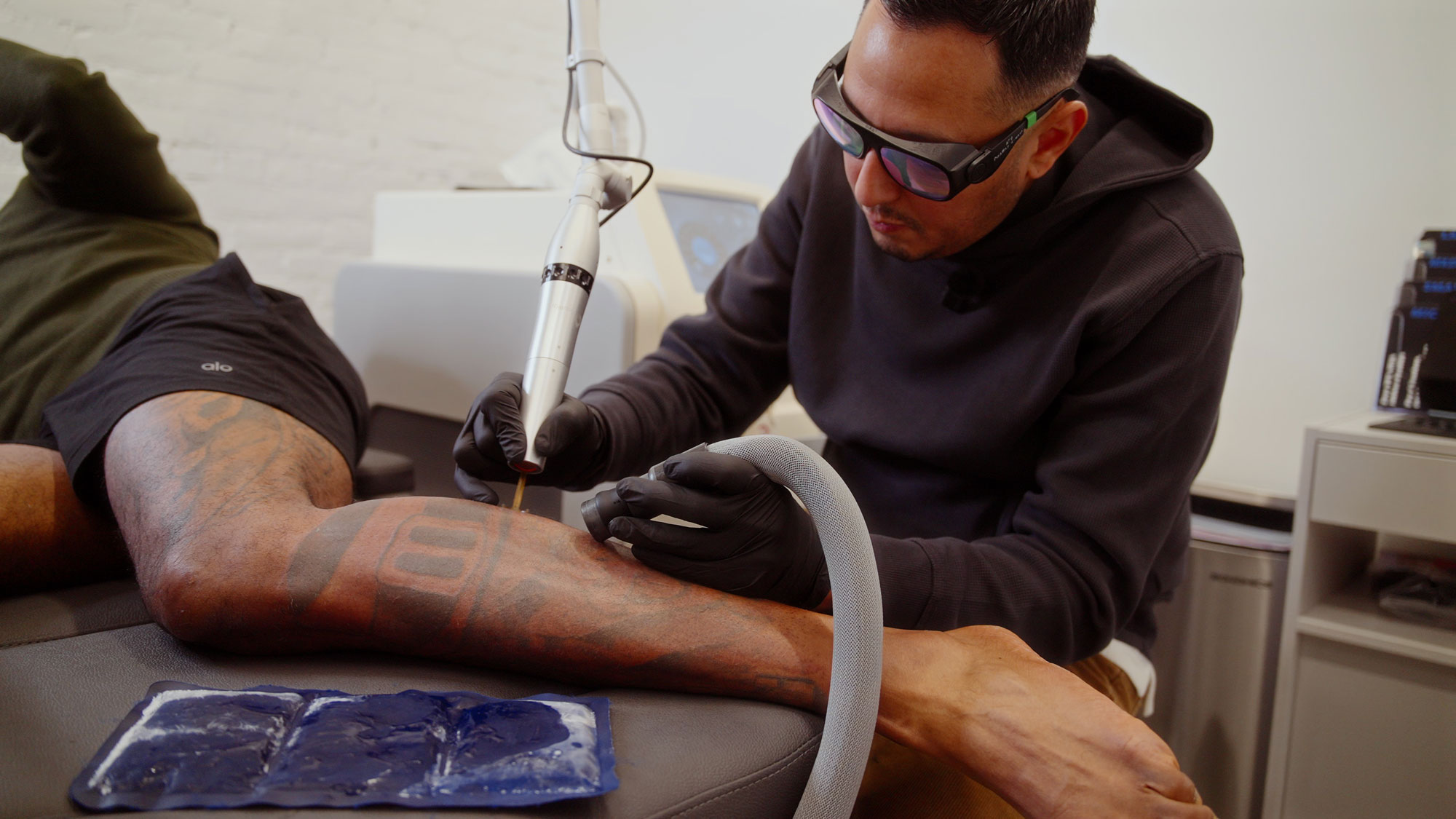
At INKLESS, we prioritize both results and client comfort. One of the most effective pain-reduction tools we use is a Zimmer Cryo device, which delivers subzero air directly onto the treatment area during the procedure.
This significantly reduces discomfort without interfering with laser performance.
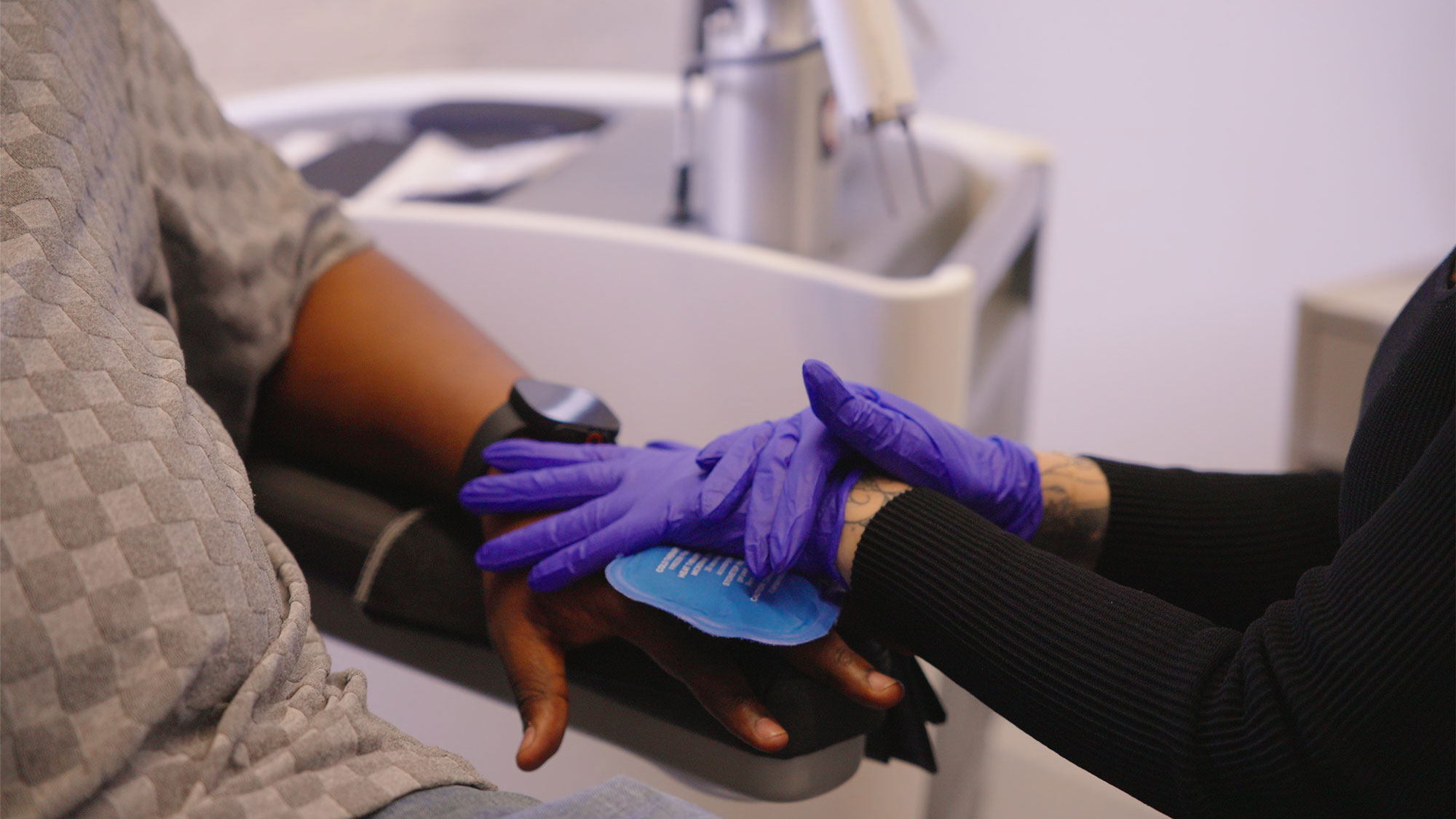
For especially sensitive areas, we also offer medical-grade ice packs and short breaks between laser pulses to keep the skin cold and improve comfort throughout the session.
Numbing cream is still available when needed, but we always help clients choose the best approach based on their tattoo, skin type, and long-term removal goals.
Final Thoughts
Laser tattoo removal can range from uncomfortable to very painful, but most clients find it manageable because treatments are extremely quick. Pain levels vary based on tattoo placement and personal tolerance, but modern cooling technology makes a major difference.
While numbing cream is an option, it can sometimes reduce tattoo removal effectiveness by partially blocking laser penetration, reducing blood flow, and introducing additional compounds the body must metabolize. Since tattoo removal relies heavily on circulation and immune response, these factors can slow fading and reduce treatment performance.
At INKLESS, we use advanced cooling technology such as the Zimmer Cryo device, along with ice packs and breaks when needed, to minimize discomfort while protecting treatment results.
If you are considering tattoo removal and are concerned about pain, the best next step is to schedule a consultation. We can evaluate your tattoo, explain comfort options, and create a treatment plan that maximizes results while keeping the process manageable.
Related Insights
Let’s talk
Have a question about your tattoo or curious about your options? Send us a message and one of our experts will personally guide you toward the safest, most effective next step.
720-465-5377
Thank you! Your submission has been received!
Oops! Something went wrong while submitting the form.
